

Horse Rug Fill Weight Guide: 150g, 200g, 250g & 300g for Australian Conditions
Author: Jane Griffiths Date Posted:6 March 2026
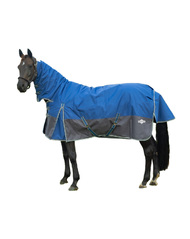

Choosing the Right Polyfill Weight for Your Horse: An Australian Guide
Updated March 2026
A practical, no-nonsense guide for Australian horse owners on understanding polyfill weights, how they work, and which fill is right for your horse, your climate, and your state.
Walk into any feed store or browse any equestrian website and you'll find winter rugs advertised with fill weights of 150g, 200g, 250g, 300g and beyond. But what does that actually mean for your horse? And more importantly - which one do you need? This guide cuts through the confusion so you can make the right call without having to ask.
What is polyfill and how does it work?
Polyfill is a synthetic insulation fibre - similar to what you find inside a pillow or a puffer jacket. In a horse rug, it comes in flat rolled sheets stitched between the outer shell and lining. The number you see on a rug (e.g. 300g) refers to how much polyfill is used per square metre of that sheet - not the weight of the whole rug.
Polyfill works by trapping air in thousands of tiny pockets within the fibre. Those air pockets slow the escape of heat radiating from your horse's body. The more polyfill per square metre, the more air pockets, and the warmer the rug. Think of it exactly like a doona on your bed - a 300g quilt is noticeably warmer than a 150g one for exactly this reason. The outer shell handles waterproofing and durability independently of the fill - for more, see our Horse Rug Waterproofing Guide.
Not all polyfill is equal. Better-quality polyfill uses a more open weave structure that bounces back over time rather than compressing and losing loft. A cheaper fill may be rated at 300g but perform closer to a good-quality 200g fill after a season of use. At Delzani, we use premium polyfill selected for long-term loft retention - the warmth you buy on day one is the warmth you get in year two.
Understanding the fill weights at a glance
Here's where each fill weight sits and who it's best suited for:
150g - Light | Savannah 600D
- Best for
- Mild nights, shoulder season, light layer or as an under rug
- Temp range
- 10°C - 15°C
- States
- QLD, coastal NSW, coastal WA, northern SA
- Delzani rug
- Savannah 600D Combo
200g - Medium | Montana 1200D
- Best for
- Cool nights, early/late winter, Thoroughbreds and fine-coated breeds in mild climates
- Temp range
- 5°C - 12°C
- States
- SE QLD, inland NSW, coastal VIC, southern WA
- Delzani rug
- Montana 1200D Combo
250g - Warm | Dakota 1200D
- Best for
- Cold nights, most Australian winters without needing an under rug
- Temp range
- 2°C - 8°C
- States
- VIC, southern NSW, ACT, elevated SA, southern WA
- Delzani rug
- Dakota 1200D Detachable Neck
300g - Extra Warm | Denver 1200D
- Best for
- Hard winters, fine-bred or older horses, horses that feel the cold - or any owner who wants maximum confidence
- Temp range
- -5°C - 5°C
- States
- TAS, alpine VIC/NSW, ACT, elevated inland areas - and any horse anywhere that runs cold
- Delzani rug
- Denver 1200D Combo
The Delzani winter rug range
All four rugs in the Delzani winter range are neck combos - full coverage from the moment you rug up. Here's how they compare:
Savannah 600D - 150g | Light
- Fill
- 150g polyfill
- Denier
- 600D - lighter, more flexible outer shell
- Neck
- Fixed combo neck
- Best for
- Mild winters, shoulder season, QLD and coastal areas, or as an under rug beneath a heavier fill. The entry-level option in the range - great value for horses that don't need serious insulation.
Montana 1200D — 200g | Medium
- Fill
- 200g polyfill
- Denier
- 1200D - tough, durable outer shell
- Neck
- Fixed combo neck
- Best for
- SE QLD, coastal NSW, Perth and surrounds, and horses that need mid-season warmth without overheating on sunny winter days. A strong all-rounder for Thoroughbreds and fine-coated breeds in moderate climates.
Dakota 1200D - 250g | Warm
- Fill
- 250g polyfill
- Denier
- 1200D - tough, durable outer shell
- Neck
- Detachable neck - the key point of difference
- Best for
- VIC, southern NSW, ACT, and elevated inland areas. The detachable neck gives you the flexibility to remove coverage on warmer days or when your horse doesn't need full combo protection - ideal for fluctuating winter temperatures or horses with sensitive necks prone to rub.
Denver 1200D - 300g | Extra Warm
- Fill
- 300g polyfill
- Denier
- 1200D - tough, durable outer shell
- Neck
- Fixed combo neck
- Best for
- Tasmania, alpine VIC/NSW, the ACT, and any horse anywhere that feels the cold - older horses, clipped horses, Thoroughbreds, and horses in poor condition. Maximum warmth, no under rug required in most conditions.
Browse the full Delzani winter rug range →
Why 150g exists - and when it actually makes sense
A 150g fill is genuinely useful, but it's often misunderstood. It is not a winter rug for most of Australia - it's a shoulder season rug, a mild night layer, or a base layer worn under a heavier fill. Think of it as the equivalent of a light fleece jumper: fine on a cool autumn evening, not enough when the temperature drops hard. The 150g is ideal for Queensland winters, coastal New South Wales during early May or late August, and for horses that simply feel the cool but don't need serious insulation. It's also the right call for a clipped horse needing just a light top layer on a mild night.
The 200g - Australia's most underrated fill weight
The 200g is the fill that most horse owners overlook, jumping straight from 150g to 300g. That's a mistake. In much of southern Queensland, coastal New South Wales, and Perth, a 200g is the right mid-season workhorse - warm enough for cool nights but not so heavy that you're roasting your horse on a sunny winter afternoon. It also allows you to rug earlier in the season without the over-rugging risk that comes with a heavier fill. For Thoroughbreds, Standardbreds, and other fine-coated breeds in moderate climates, the 200g often hits the sweet spot.
The 250g - the quiet achiever
If you want one rug that handles the bulk of the Australian winter without needing an under rug underneath, the 250g is often your answer. It covers cold nights in Victoria, inland New South Wales, elevated South Australia, and the cooler parts of Western Australia without crossing into overkill territory. For healthy horses in good condition, the 250g typically handles nights down to around 2°C-4°C without an under rug. It's also the most versatile option for horses that move between climates - travelling from Sydney to the Snowy Mountains for competition, for example.
The 300g - not just for the south
The 300g is the standard for Tasmania, alpine Victoria, the ACT, and any property that regularly sees nights below 0°C. But it's also the right choice for specific horses anywhere in Australia - including Queensland. Older horses, horses that have lost condition, Thoroughbreds and Warmbloods with fine coats, and any horse that visibly shivers or loses weight in winter can all benefit from a 300g regardless of postcode. Many QLD owners simply prefer the confidence of a 300g, knowing their horse is well covered no matter what the night brings. When in doubt between 250g and 300g for a sensitive or older horse, anywhere in the country - choose 300g.
Your paddock matters as much as your postcode
The temperature on your phone's weather app is recorded at a Bureau of Meteorology station - often kilometres from your property, at a standardised height, in open conditions. What your horse actually experiences overnight can be quite different. Two properties in the same town can have meaningfully different effective temperatures depending on their environment. Here's what actually matters:
Wind: This is the biggest single variable after temperature itself. A still night at 5°C is very manageable for most horses. A 5°C night with a strong southerly blowing across an exposed paddock is a different situation entirely. Wind strips heat from a horse's coat the same way it chills you walking to the car without a jacket. If your paddock is exposed to prevailing winds with no natural break, add one fill weight to whatever the temperature alone suggests.
Rain and wet conditions: A horse's coat is a remarkably effective insulator when dry - the individual hairs trap warm air close to the skin. Once that coat is wet, that insulation collapses almost entirely. A wet horse in a 10°C night is losing body heat at a rate that a dry horse at the same temperature is not. This is why a rain sheet earns its place even on mild wet nights, and why a wet rug is worse than no rug at all - always check that your waterproofing is holding.
Dew and overnight moisture: Even without rain, heavy overnight dew in humid areas - articularly near creeks, dams, rivers or low-lying ground — can saturate a horse's coat by morning. Don't underestimate dew. It's one of the most common causes of a horse being colder than the temperature forecast would suggest.
Elevation: Temperature drops roughly 1°C for every 100 metres of elevation gain. If you're on a property at 800 metres above sea level, your effective overnight temperature is consistently around 8°C colder than the nearest coastal town. This is why places like Armidale, Stanthorpe, the Southern Tablelands, and the Victorian high country get so much colder than their latitude alone would suggest - and why horses in these areas consistently need one fill weight more than owners initially expect.
Cold air pooling: Cold air is denser than warm air and flows downhill overnight, pooling in low-lying areas, gullies, creek flats and valley floors. If your horse sleeps in a low paddock near a creek, it may be sitting in air that is 3°C to 5°C colder than the paddock on the rise above it - even on the same property. This is worth knowing if you have horses in different paddocks and are trying to apply one rugging rule across the lot.
Shelter and natural windbreaks: A good stand of trees, a well-positioned shed, or even a dense hedge makes a measurable difference to what a horse experiences overnight. A horse with access to effective shelter can often manage one fill weight lighter than a horse in an open, exposed paddock at the same temperature. Conversely, if your shelter is poorly positioned - facing the prevailing wind, too small, or too far from where the horse actually stands at night - it offers little practical protection.
Ground conditions: Wet, boggy paddocks are colder environments than dry ones. Mud conducts heat away from hooves and legs and increases the general dampness of the horse's environment overnight. Horses standing in wet ground for hours lose body heat through their feet more readily than horses on dry ground.
Hay and feed: Worth mentioning because it is genuinely relevant to rugging decisions. Digestion of fibre in a horse's hindgut generates significant internal heat - a horse with good access to quality hay overnight is better equipped to stay warm than one on poor pasture or restricted feed. If your horse is on limited feed through winter, compensate with a heavier rug. The two work together.
The daytime-to-overnight swing: Australian winters are famous for warm days and cold nights, particularly inland. A rug appropriate for a 3°C overnight low may be completely wrong by 1pm the following day if temperatures climb to 18°C. This is the most common cause of over-rugging in Australia - the rug goes on at night and nobody takes it off in the morning. Build a habit of checking and adjusting at the same time each day, and if you can't check mid-morning, the Dakota's detachable neck gives you one easy way to reduce coverage without a full rug change.
State-by-state guide: which fill for where you live *
Queensland
Coastal QLD (Brisbane, Sunshine Coast, Gold Coast) is mild - a 150g is a reasonable starting point for a healthy unclipped horse on an average winter night. But that's the floor, not the ceiling. Inland areas like Toowoomba, Stanthorpe, and the Darling Downs get genuinely cold overnight, and a 200g-300g is entirely appropriate. Even on the coast, a clipped horse, an older horse, a Thoroughbred, or simply a horse that runs cold will be far more comfortable in a 200g or 300g. There is no harm in a 300g on a mild QLD night - check your horse isn't sweating and adjust from there.
New South Wales
NSW covers an enormous climate range. Coastal areas (Sydney, Newcastle, Wollongong) are mild - a 150g-200g covers most of winter. Move inland to Orange, Bathurst, or Armidale and temperatures drop sharply, with regular frosts - a 250g-300g is more appropriate. The Snowy Mountains region requires a 300g as standard, with an under rug available for the coldest stretches.
Victoria
Victoria is generally a 250g-300g state. Melbourne and surrounding coastal areas can get away with 200g-250g for most of winter, but the further inland and elevated you go - Ballarat, Bendigo, the Victorian Alps - the harder the winters. A 300g should be your baseline for inland VIC horses, with an under rug on hand for the worst of July and August.
ACT
Canberra and surrounds are cold. Night frosts are common from May through September, with overnight temperatures regularly dropping below 0°C. A 300g is the standard starting point for ACT horses, with an under rug used through the coldest months. Do not underestimate Canberra winters - a 250g alone will often be insufficient mid-winter.
South Australia
Adelaide and coastal SA have mild winters - a 200g-250g suits most horses. Move into the Adelaide Hills or further south toward the Fleurieu Peninsula and temperatures drop more noticeably; a 250g-300g is the right range. Elevated areas require the same approach as inland Victoria.
Western Australia
Perth and the Southwest have mild winters - a 150g-200g handles most of the season comfortably. The hills around Perth (Mundaring, Kalamunda) get noticeably colder than the coast, where a 200g-250g is more appropriate. The south coast (Albany, Esperance) gets cold, wet winters - a 250g is the safer call for horses in this region.
Tasmania
Tasmania is Australia's coldest state and the only place where a 300g should be considered the minimum, not the maximum. Many Tasmanian horse owners run a 300g rug with an under rug through winter as standard practice, particularly in the highlands. If you are debating between a 250g and a 300g in Tasmania - buy the 300g.
* State recommendations are a general starting point based on typical regional climate patterns. Your property, your paddock, and your horse are unique. A horse in a sheltered valley will experience winter very differently to one on an exposed hilltop in the same postcode. Always use these guidelines alongside your own daily observations - no guide knows your horse better than you do.
Your horse's individual needs matter as much as the temperature
The guides above assume a healthy adult horse in moderate condition with a natural winter coat. The following factors should push you toward a heavier fill regardless of where you live:
Breed and coat type: Thoroughbreds, Standardbreds, and Warmbloods have finer coats and feel the cold more. Go up one fill weight from what the climate alone suggests.
Age: Young horses (under 3) and older horses (15+) are less efficient at regulating body temperature. Go up one weight during winter, especially if nights are cold.
Condition: A horse in good condition has natural insulation. A thin horse in poor condition loses heat quickly - a heavier fill is essential.
Clipping: A full clip in mid-winter requires a 300g as a minimum. A trace clip still removes enough coat to push you up one fill weight.
Stabled vs turned out: Wind chill significantly increases the effective cold felt by a turned-out horse. In wet, windy conditions - rug heavier and check regularly for signs of overheating.
A few more things worth knowing
Horses in work vs spelling: A horse in regular work generates significantly more body heat than one standing in a paddock all winter. A fit, actively worked horse in Ballarat may genuinely be comfortable in a 250g where a horse spelling in the same paddock needs a 300g. Factor in workload - it's not just about the temperature outside.
Water access: Horses drink less when water is very cold, and a dehydrated horse thermoregulates poorly. In cold snaps, check troughs daily - not just for ice, but for temperature. A horse reluctant to drink cold water overnight is burning more energy staying warm and may need more feed and a slightly heavier rug to compensate. This is particularly relevant on properties with exposed metal troughs in alpine and tablelands areas where overnight temperatures drop hard and fast.
Horses in work - rugging after exercise: Never rug a hot horse immediately after work. Rugging before your horse has properly cooled down traps sweat and heat under the rug, which can cause skin issues, overheating, and rug rub. Walk your horse out, let the coat dry, and then rug. In cold conditions a wool or fleece cooler worn loosely while walking out is the right tool - it wicks moisture while allowing the horse to cool gradually before the winter rug goes on.
Mud fever and rain scald: Wet winters create ideal conditions for mud fever on legs and rain scald across the back and rump. A well-fitted waterproof rug dramatically reduces rain scald risk by keeping the coat dry. However, a poorly fitting rug that lets water in, or one with failing waterproofing, can actually make conditions worse by trapping moisture against the skin. Check the fit and the waterproofing regularly - particularly after heavy rain. If you're seeing rub marks or damp patches under the rug, address it immediately.
Rugging young horses: Foals and yearlings have a much higher lower critical temperature than adult horses - they feel the cold at temperatures that a mature horse handles comfortably. A foal in its first winter in alpine or elevated areas should be rugged earlier in the season and checked more frequently than the adults in the same paddock. Growing horses also burn more energy through winter, so feed and rug go hand in hand.
The acclimation window: Australian winters don't arrive overnight. Horses acclimatise gradually as temperatures drop through autumn - their coat thickens, their metabolism adjusts, and their lower critical temperature shifts accordingly. This means a 10°C night in late May is felt very differently to a 10°C night in late July by the same horse. Rug up gradually as the season changes rather than waiting for the first cold snap and reaching for the heaviest option straight away.
The layering approach: more flexible than a single heavy rug
A base layer (150g-200g) worn under a mid-weight rug gives you flexibility as temperatures fluctuate through the season. Remove the under rug on warmer days, add it back as temperatures drop - without needing to buy multiple full rugs. This approach also extends the life of each individual rug since no single one is worn every day.
Signs your rug choice is wrong
Too cold: shivering, tense muscles along the topline, reluctance to move, hunched posture, weight loss.
Too warm: sweating under the rug (particularly at the neck and shoulders), damp lining, restlessness, loss of appetite.
Over-rugging is just as problematic as under-rugging. A horse that cannot cool down properly is at risk of heat stress and skin issues from trapped sweat.
Delzani rugging temperature guide
Use this as your starting point. All recommendations assume a healthy adult horse with a natural winter coat. Adjust up one fill weight for clipped, fine-bred, older, young, or thin horses.
Frequently asked questions
What does the gram weight on a horse rug actually mean?
The gram weight refers to how much polyfill insulation is used per square metre of the rug's lining - not the total weight of the rug. A 300g rug has 300 grams of polyfill for every square metre of lining. More grams means more insulation and more warmth.
Is a 300g rug too warm for Queensland winters?
Not necessarily. For a healthy, unclipped horse on the coast, a 150g-200g is a sensible starting point - but that's not the whole picture. Older horses, clipped horses, Thoroughbreds, and horses that simply run cold are often far more comfortable in a 300g even in QLD. Inland Queensland gets genuinely cold overnight and a 300g is entirely reasonable. The key is to check your horse isn't sweating underneath - if they're comfortable and dry, the fill weight is right regardless of what the calendar says.
What is the difference between 250g and 300g - is it really worth it?
For most horses in most parts of Australia, a 250g covers winter comfortably without an under rug. The step up to 300g is worth it for horses in Tasmania, alpine Victoria, the ACT, or for horses that are clipped, elderly, thin, or fine-bred. If your horse regularly shivers in a 250g or loses weight over winter, move to 300g.
Can I use a 150g rug as an under rug under a heavier rug?
Yes - this is one of the best uses for a 150g fill. Worn under a 250g or 300g turnout, it adds meaningful warmth without needing a separate purpose-built under rug. On warmer days you can remove the outer rug and leave the 150g as a standalone light layer.
How do I know if my horse is too hot or too cold in their rug?
Check under the rug at the chest and shoulders. Damp coat or hot skin means too warm - swap to a lighter fill. Shivering, cold back, or weight loss through winter means the fill is insufficient. Always check the horse, not just the forecast.
Does a higher denier mean a warmer rug?
No. Denier is about the strength of the outer shell, not warmth. A 1200D and a 600D rug with the same polyfill weight will be equally warm. Choose denier based on how hard your horse is on rugs. See our full guide: Understanding Denier - 600D vs 1200D Horse Rugs.
What fill weight should I use for a clipped horse in Victoria?
A clipped horse in Victoria should be in a 300g as the winter baseline, with an under rug available for the coldest weeks of July and August. A trace clip in mild VIC conditions may get away with a 250g, but a full clip in inland or elevated Victoria needs 300g plus a neck cover as a minimum.
Is polyfill better than polar fleece for winter warmth?
Yes, for serious cold-weather insulation. Polar fleece wicks moisture and adds light warmth, but it performs roughly equivalent to a 100g polyfill rug - useful as a stable rug or light under-layer, but not a standalone winter solution in cold climates.
Putting it together: a simple decision guide
If you are in QLD or coastal areas, start with 150g-200g. If you are in VIC, ACT, TAS, or elevated inland areas, start with 300g. Everywhere else - NSW inland, SA, WA hills - 200g-250g is your range. Then adjust up one weight if your horse is old, young, thin, clipped, fine-bred, or turned out in wet and windy conditions. Adjust down one weight if your horse is a hardy native breed in good condition with a full natural coat and access to good shelter.
Explore the Delzani Winter Rug Range · All Horse Rugs · Rug Accessories & Liners · 600D vs 1200D - Understanding Denier · Horse Rug Waterproofing Guide.
Written by Jane Griffiths - An experienced Australian horse owner and product developer with over three decades immersed in equestrian life. Jane has spent years refining horse rugs, tack, and riding apparel to better suit Australian climates. She has enjoyed countless weekends at gymkhanas, show jumping events, and pony club competitions with her daughter, and still loves hitting the trails with friends whenever she can. Her lifelong passion for horses and hands-on understanding of equine comfort continue to shape her practical, rider-first approach to horse care and product design.
Related Equestrian Guides
Delzani Horse Rug Sizing Guide
We have put together this comprehensive guide to help you purchase the ideal size Delzani horse rug.
Understanding your horse rugs waterproofing
Learn how horse rug waterproofing and breathability really work, why membranes matter more than fabric, and how to test, care for, and choose rainsheets. Explore Delzani’s 600D Waratah and 1200D Wyndham rugs, built for tough Australian conditions.
A Guide to Delzani Horse Rug Fabrics

Understanding Denier: The Key Differences Between 600D and 1200D Turnout Rugs
Confused about 600D vs 1200D horse rugs? Learn what denier really means, how it affects toughness (not warmth or waterproofing), and when to choose Delzani’s Waratah 600D rainsheets for lighter use or Wyndham 1200D rainsheets for maximum durability.
Horse Rugging: 8 Common Mistakes Horse Owners Should Avoid This Summer
Rugging in the Australian summer can protect your horse from sun, flies and coat damage, but the wrong rug can cause overheating, rubbing and discomfort. Learn 8 common rugging mistakes and how to keep your horse cool, safe and comfortable this season.
Avoiding Horse Rug Rub Marks: Complete Fit & Prevention Guide
For Australian horse owners dealing with shoulder rub, chest rub or slipping rugs, this guide explains the real causes of rug rub marks, how to fix them, and the common fit mistakes that lead to rubbing.
Privacy Policy

Delzani is committed to providing you with a high level of customer service. This includes protecting and maintaining the privacy, accuracy and security of your personal information. We are bound by and will abide by the National Privacy Principles in the Privacy Act (Cth) 1988 . This is in addition to our existing obligations under the Privacy Act.
What personal information do we collect and hold?
In the process of conducting our business we are likely to collect a wide range of personal information about you. The type of personal information we collect always includes your name, residential and billing address, email address, telephone or mobile numbers and products and services we provide to you. We don’t store any credit card information on our web site. We pass it onto our bank for processing.
How do we collect personal information?
Delzani collects personal information directly from you when you submit it online at Delzani.com.au . There may be occasions when we collect information from publicly available sources or third parties. This information includes names, email addresses, telephone numbers and social media profile name sourced from permission based marketing activities.
Cookies and Web beacons
A cookie is a small text file that is stored on a user’s computer for record-keeping purposes. We use cookies on this site. We use session ID cookies. We use session cookies to make it easier for you to navigate our site. A session ID cookie expires when you close you browser. If you reject cookies, you may still use our site, but your ability to use some areas of our site will be limited.
Some of our business partners (e.g. tracking utility company) use cookies and Web beacons on our site. We have no access to or control over these tracking technologies.
Delzani advertises with Google. Google may show you our ads based on your having visited our site. If you do not wish to see these ads you can opt-out by visiting the Google advertising opt-out page here http://www.google.com/privacy_ads.html.
Rate and Review
If you provide a review or rating for a product available through Delzani Online we reserve the right to publish part or all of your review or rating together with your first name and suburb.
Links to Other Sites
This Website contains links to other sites that are not owned or controlled by Delzani. Please be aware that we, Delzani, are not responsible for the privacy practices of such other sites. We encourage you to be aware when you leave our site and to read the privacy statements of each and every Web site that collects personally identifiable information. This privacy statement applies only to information collected by this website.
How do we use personal information?
In order to improve and better our offers and service, we may keep track of patterns of use in the e-mails and social interactions we send. By supplying us your information, you have given us permission to communicate to you via mail, e-mail, SMS, MMS, social media and telephone to inform you about services we deliver relevant to you indefinitely.
Disclosure of personal information
We may use or disclose your personal information to organisations outside Delzani for purposes relating to the management of your account with us. Such organisations include: Service providers who manage the services provided to you; mailing systems which organise delivery of the products you have purchased; live help service providers, maintenance and repair services; market research; and our professional advisers, accountants, lawyers and auditors.
We require these organisations to adhere to strict confidentiality of your personal information and also seek to ensure that they adhere to the National Privacy Principles. These service providers may not use your personal information for their own marketing purposes.
Security
Delzani takes reasonable steps to ensure that your personal information is secure. We have robust systems and procedures in place to protect your privacy whenever we collect, store and use or disclose personal information. We are continually upgrading these systems and reviewing our procedures to ensure the highest standards of security are used to protect your personal information.
How to access and amend personal information
If you wish to obtain a copy of our data privacy policy, access the personal information we hold about you or your personal information is inaccurate, incomplete outdated or to unsubscribe, please direct any queries regarding your privacy rights email sales@delzani.com.au.
The release of information is subject to some exceptions such as information relating to existing or any anticipated legal proceedings, together with exceptions provided by the Privacy Act. Our objective is to respond to any request within a reasonable timeframe and no later than 30 days.
How your information may be shared
Except for the purposes outlined in the Delzani Privacy Policy, we never sell or disclose your personal information. However, we may release personal information under the following circumstances:
-
when requested by the courts or laws (for example, a subpoena) or regulation or is requested by a government agency;
-
where we deem a company or an individual may be engaged in fraudulent activity or other deceptive practices that a governmental agency should be made aware of; and/or to appropriate persons, where your communication suggests possible harm to others.
Changes in this Privacy Policy
If we decide to change our privacy policy, we will post those changes to this document, the home page and other places we deem appropriate so that you are aware of what information we collect, how we use it and under what circumstances, if any, we disclose it. We reserve the right to modify this privacy policy at any time, so please review it frequently. If we make material changes to this policy, we will notify you here, by email, or by means of a notice on our homepage.

Shop Now. Pay Later.
Always interest-free.

Add your favourites to cart

Select Afterpay at checkout

Log into or create your Afterpay account, with instant approval decision

Your purchase will be split into 4 payments, payable every 2 weeks
All you need to apply is to have a debit or credit card, to be over 18 years of age, and to be a resident of country offering Afterpay
Late fees and additional eligibility criteria apply. The first payment may be due at the time of purchase
For complete terms visit afterpay.com/terms